The lands
Frontierland
Step through the log gate of the stockade and the street changes under your feet. Disneyland's own fact sheet puts it plainly: the pavement turns to dirt, and the trees turn to cactus. Near the entrance stands a petrified tree, a gift from Lillian Disney to the park (Disneyland fact sheet).
Frontierland was one of the five lands on opening day, July 17, 1955. In his dedication he called it a tribute to the faith, courage and ingenuity of the pioneers. In the first summer the land was built as a frontier town you could ride through: on a stagecoach, a Conestoga wagon or a pack mule, on a keel boat or the paddle wheeler. Walt's television frontiersman was there too. A Davy Crockett Arcade and a Davy Crockett Frontier Museum opened with the park (Wikipedia: Frontierland), and a second-floor window over the Crockett & Russel Hat Co. still honors Fess Parker, who played Crockett for Walt's TV show (Disneyland fact sheet).
Much of that first frontier is gone. The stagecoaches and wagons were gone by 1959. The Indian Village closed in 1971, the pack mules in 1973, the mine train in 1977. What Frontierland kept was the river at its heart, and the story of the river runs through this chapter and into The Boats and The Trains chapters.
Attractions
Dates are by year where the sources give only years. Most come from the Disneyland list in Wikipedia's Frontierland article; others are linked.
| Attraction | Years | Notes |
|---|---|---|
| Mark Twain Riverboat | 1955–today | See The Boats |
| Frontierland Shootin' Exposition | 1955–today | Shooting gallery with nearly 100 targets (fact sheet) |
| Golden Horseshoe Revue | Jul 17, 1955–Oct 12, 1986 | Stage show; see below (D23) |
| Mike Fink Keel Boats | 1955–1997 | See The Boats |
| Stagecoach Ride | 1955–1959 | |
| Conestoga Wagons | 1955–1959 | |
| Painted Desert | 1955–1959 | |
| Indian Village and Ceremonial Dance Circle | 1955–1971 | |
| Rainbow Ridge Pack Mules | 1955–1973 | |
| Davy Crockett Arcade | 1955–1987 | |
| Tom Sawyer Island | 1956–today | Pirate's Lair theme added 2007 |
| Fort Wilderness | 1956–2003 | Log fort on the island |
| Burning Settler's Cabin | 1956–2003 | Island scenery seen from the river |
| Rainbow Caverns Mine Train | 1956–1960 | See The Trains |
| Sailing Ship Columbia | 1958–today | See The Boats |
| Mine Train Through Nature's Wonderland | 1960–1977 | See The Trains |
| Big Thunder Mountain Railroad | Sep 2, 1979–today | (D23) |
| Big Thunder Ranch | 1986–1996, 2005–2016 | Petting farm and barbecue |
| Fantasmic! | 1992–today | Night show on the river |
The island and the river
Tom Sawyer Island opened in the summer of 1956, reached only by raft. One biography of Walt, quoted by the historian behind Duchess of Disneyland, calls it the only early Disneyland attraction he designed personally. He took his cue from Jackson's Island in Mark Twain's novel (Duchess of Disneyland).
The island's main draw for nearly fifty years was Fort Wilderness, a log stockade. Across the water stood the Burning Settler's Cabin, a scene of a frontier home on fire, staged for the passing boats. Both closed in 2003 (Wikipedia: Frontierland). The fort was worn out, its effects were switched off, and a child had been hurt there. A smaller shell of the fort still stands (Duchess of Disneyland).
In 2007 the island became Pirate's Lair on Tom Sawyer Island, with grottos, buried treasure and pirate props that followed the success of the Pirates of the Caribbean films. Then, in 2016 and 2017, the north end of the island was cut back and the river reshaped to make room for the land that became Star Wars: Galaxy's Edge, and for a new railroad route around it (Duchess of Disneyland). The boats that sail around it all have their stories in the The Boats chapter.
Big Thunder Mountain
By the 1970s the Mine Train Through Nature's Wonderland was showing its age. The ride had carried guests past more than 200 Audio-Animatronics animals since 1960, and guests found it slow. Disneyland asked Imagineer Tony Baxter to adapt a runaway mine train being planned for Florida. The idea traced back to Marc Davis's drawings for an unbuilt project called Thunder Mesa. Baxter said of those drawings, "I was very inspired by that." He persuaded Disney chief Card Walker to keep the mine train in. The Walt Disney Family Museum calls it the first large-scale Disney park attraction created without Walt's involvement (Walt Disney Family Museum).
Big Thunder Mountain Railroad opened on September 2, 1979. Designers searched ghost towns across the western states for real gold-rush relics, including ore carts, cogwheels and buckets, and set them along the track. Some of the old mine train's scenery was kept (D23).
The little mining town at the foot of the mountain is Rainbow Ridge. Its storefronts date back to the 1956 Rainbow Caverns Mine Train. Art director Bill Martin designed them, and they were a favorite of the Disney family. Termites eventually destroyed the originals, and Imagineers rebuilt them from the old blueprints (Walt Disney Family Museum).
The Golden Horseshoe, dining and shops
The Golden Horseshoe opened with a party before the park did. On Wednesday, July 13, 1955, Walt and Lillian Disney marked their thirtieth wedding anniversary there with about 300 invited guests, after a cruise on the new Mark Twain. During the show Walt appeared in a balcony box, traded mock gunfire with Pecos Bill, and climbed down to the stage. His daughter Diane remembered him beaming at everyone from the stage. Wally Boag counted that night as the revue's first real performance (Walt Disney Family Museum).
Harper Goff designed the saloon's interior. He had drawn a saloon set for the Doris Day film Calamity Jane (Wikipedia: Golden Horseshoe Saloon). The Golden Horseshoe Revue ran from opening day until October 12, 1986. Its first stars were tenor Donald Novis, Judy Marsh and comedian Wally Boag. Betty Taylor later had a long run as Slue Foot Sue, and Fulton Burley took over the tenor's role. Walt kept a favorite box beside the stage (D23). The revue played about 39,000 times, and Guinness listed it as the longest-running musical of all time (Wikipedia).
The saloon kept performing after the revue ended: a Jamboree from 1986 to 1994, then bluegrass, comedy, magic, a Toy Story 2 show, improv and a dueling-piano show that closed when the park shut for the pandemic on March 14, 2020 (D23; Wikipedia).
| Place to eat | Years | Notes |
|---|---|---|
| Golden Horseshoe | 1955–today | Quick service today (fact sheet) |
| Aunt Jemima's Pancake House → Aunt Jemima's Kitchen → Magnolia Tree Terrace → River Belle Terrace | 1955–1962, 1962–1970, 1970–1971, 1971–today | Said to be Walt's favorite place in the park for breakfast (Duchess of Disneyland) |
| Casa de Fritos → Casa Mexicana | 1955–1982, 1982–2001 | Frito Company partnership ended in 1982 (Duchess of Disneyland) |
| Rancho del Zocalo Restaurante | 2001–today | Opened weeks before Casa Mexicana closed (Duchess of Disneyland) |
| Chicken Plantation | 1955–1962 | Stood where New Orleans Square was later built (Orange County Archives photo note) |
| Stage Door Café | — | Quick service |
| Ship to Shore Marketplace | — | Turkey legs and snacks near the Mark Twain (fact sheet) |
Shops past and present include the Frontier Trading Post (1955–1987), the Pendleton Woolen Mills Dry Goods Store (1955–1990), Pioneer Mercantile and the Westward Ho Trading Company (Wikipedia: Frontierland; fact sheet).
Frontierland in pictures
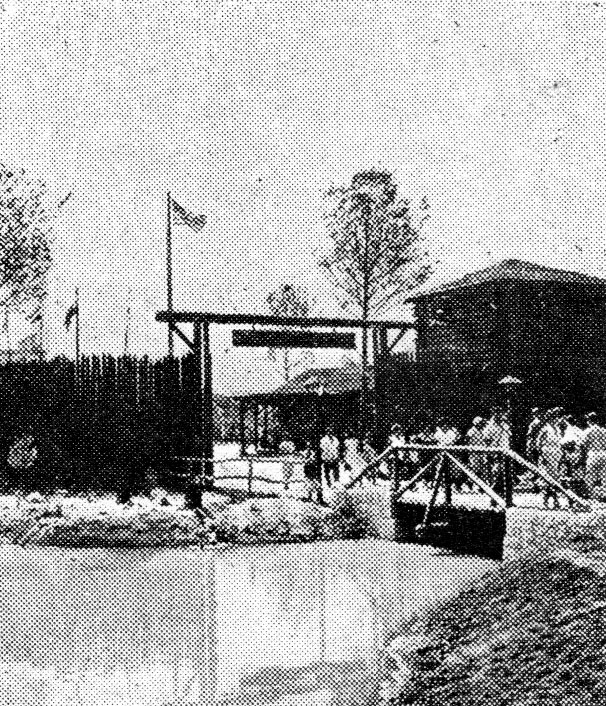
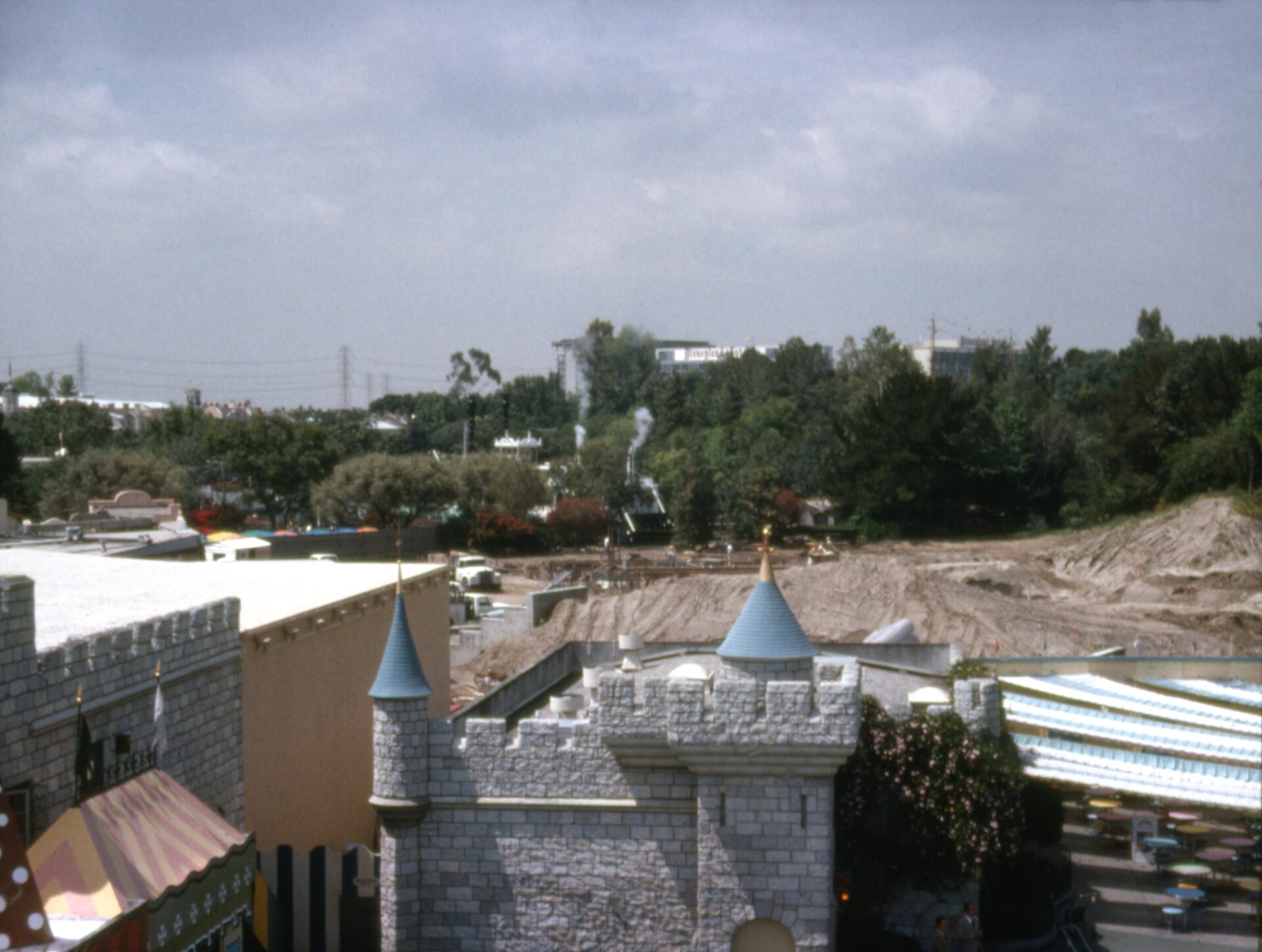
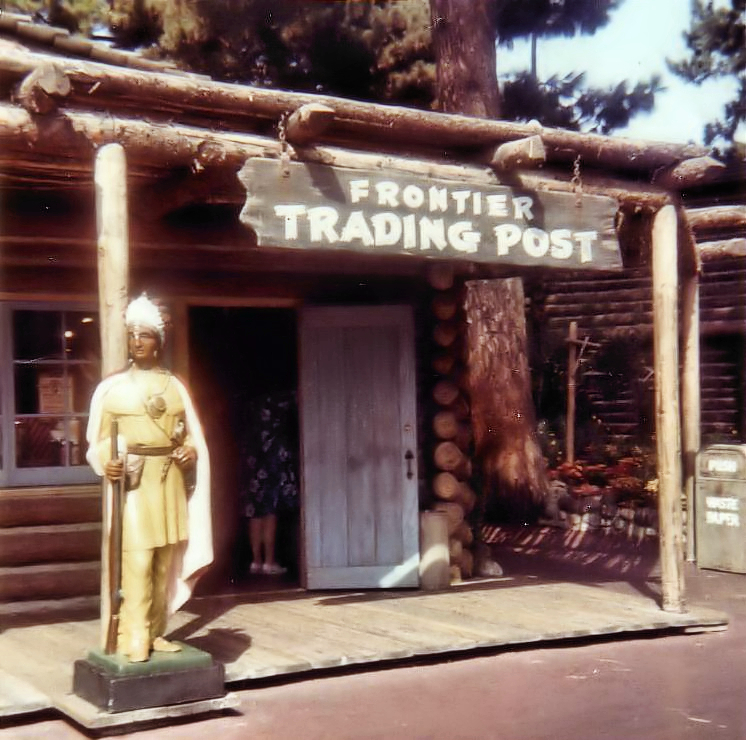
The raft crossing to Tom Sawyer Island around 1960 is pictured in the The Boats chapter.
Fun facts: Frontierland
- The petrified tree near the entrance was a gift to the park from Lillian Disney (fact sheet).
- The Golden Horseshoe's first audience was the Disneys' anniversary party, four days before opening day (Walt Disney Family Museum).
- Walt took dancing lessons before that party. Wally Boag remembered it (Walt Disney Family Museum).
- The Golden Horseshoe Revue played about 39,000 times (Wikipedia).
- A 1962 TV film called Golden Horseshoe Revue was directed by Ron Miller, Walt's son-in-law (Wikipedia).
- Big Thunder Mountain was the first large-scale Disney park attraction made without Walt (Walt Disney Family Museum).
- The ore carts, cogwheels and buckets along Big Thunder's track came from real ghost towns in the West (D23).
- Termites ate the original Rainbow Ridge storefronts. The ones you see were rebuilt from the original blueprints (Walt Disney Family Museum).
- Walt is said to have liked his breakfast at the pancake house that became River Belle Terrace (Duchess of Disneyland).
- The Shootin' Exposition offers nearly 100 targets (fact sheet).
Quotes
"Here we experience the story of our country's past."
— Walt Disney, from his Frontierland dedication (Disneyland fact sheet)
"When he got to the stage he stood there beaming at everyone."
— Diane Disney Miller, on her father at the Golden Horseshoe, July 13, 1955 (Walt Disney Family Museum)
"I was very inspired by that."
— Tony Baxter, on Marc Davis's Thunder Mesa drawings (Walt Disney Family Museum)